Irrigation & Sprinkler Leak Detection in DeKalb, IL
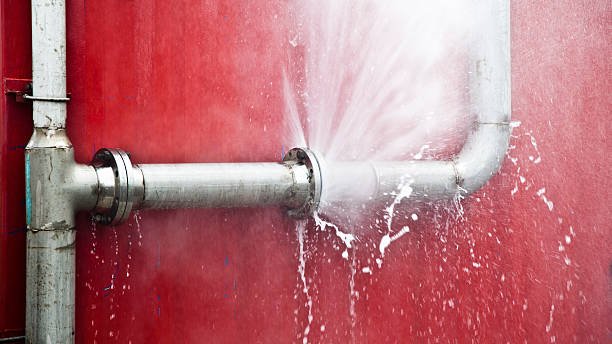
Irrigation systems in DeKalb County run hard from May through September and then sit frozen for six months. That pattern produces two distinct kinds of failure: in-season leaks at heads, valves and fittings, and freeze damage that only reveals itself when the system is charged in spring.
Because irrigation is usually tapped off the domestic supply downstream of the meter, every gallon lost to a leaking zone shows on your City of DeKalb bill. And unlike a house leak, an irrigation leak often runs for months without a single obvious symptom — the water goes into the ground, which is where you meant it to go anyway.
On this page
Signs of an irrigation system leak
A summer water bill much higher than last summer
With similar weather and the same schedule, a large increase means a leak somewhere in the system.
One area of lawn is always saturated
Constantly soft ground, standing water or moss in a specific spot, especially between heads rather than at one.
Low pressure on one zone
Heads on a single zone that barely pop up or throw short distances indicate a break upstream on that lateral.
A head that weeps between cycles
Water draining from the lowest head after shutoff is often normal low-head drainage, but continuous seeping means a valve is not closing.
The controller is off and water still runs
A valve diaphragm failure or a stuck solenoid lets water through with no call for it. This one wastes enormous volume.
Erosion or a sinkhole in the lawn
Water escaping under pressure washes soil away, leaving a depression that grows through the season.
Water at the backflow preventer
Backflow devices sit above grade and are the first casualty of a hard freeze. Cracked bodies and split test cocks are common in April.
A wet strip along a bed or driveway edge
Follows the buried lateral, usually where a spade or an edger found it during landscaping.
How we locate irrigation leaks
1
Meter test with the system isolated
We shut the irrigation supply valve and watch the meter, then open it with the controller off. If the meter moves with the controller off and the irrigation valve open, a zone valve is passing or a mainline is leaking.
2
Run each zone and observe
Zone by zone, watching pressure, head performance, spray pattern and surface water. Most leaks reveal their zone this way within half an hour.
3
Pressure test the suspect zone
Isolating a single lateral and holding pressure confirms whether the leak is in that lateral or at a valve or head.
4
Trace the line and locate acoustically
Poly and PVC irrigation laterals are traced with a sonde or locator wire, then walked with a ground microphone while pressurized. This gives a spot to dig rather than a strip to trench.
5
Inspect the valve box and backflow assembly
Many ‘line leaks’ turn out to be a valve box full of water from a failed diaphragm or a leaking union — an hour’s repair instead of an excavation.
6
Repair and retest the whole system
Repair the failure, then run every zone again. A system that has had one freeze failure frequently has two.
Freeze damage and winterization in DeKalb
Nearly every spring irrigation call we take in DeKalb traces back to the previous autumn’s shutdown. Water left in a lateral, a head or a backflow body freezes, expands, and splits the component. Nothing looks wrong until the system is charged in April and a zone will not build pressure.
Doing the shutdown properly
Close the irrigation supply valve, drain the backflow assembly through its test cocks, and blow out every zone with compressed air at appropriate pressure and volume until only mist comes from the heads — then move to the next zone. Insulate or remove the backflow device depending on type. Set the controller to off or rain mode rather than unplugging it, so the programming survives.
Timing matters. In DeKalb County, get it done before the first sustained hard freeze, which commonly arrives in the first half of November but can come earlier. A single overnight drop into the teens is enough to crack a backflow body.
Backflow prevention is a code requirement
Irrigation systems connected to a public water supply need backflow protection so that fertilizer, pesticide and standing water cannot be drawn back into the drinking water system. DeKalb’s water service code requires cross-connection control, and devices generally need periodic testing. If yours has been cracked since spring, it is not protecting anything.
Repairs and upgrades we handle
- Lateral and mainline repairs in poly and PVC, with proper fittings rather than tape-and-hope
- Valve rebuilds and replacement, including diaphragms, solenoids and complete valve assemblies
- Head replacement and adjustment, including converting spray zones to rotary nozzles for better efficiency on the large lots common out toward Bethany Road
- Backflow preventer repair, replacement and testing
- Controller replacement, including weather-based controllers that cut usage meaningfully during a wet DeKalb spring
- Full winterization and spring start-up as a scheduled service
- Drip zone repairs for beds and foundation plantings, where leaks are almost invisible
Common questions
That pattern points directly at the irrigation system. Either a zone is leaking, a valve is passing, or the schedule is delivering far more water than the lawn needs. The diagnostic is straightforward: isolate the irrigation supply and compare meter behavior with and without it.
Yes. Zone testing plus line tracing and acoustic locating narrows a leak to a small area, and the repair is usually a single square of sod lifted and replaced. We do not trench a lawn to hunt for a leak.
No. A cracked backflow body is replaced, not repaired. It is both a pressure component and a safety device protecting the public water supply, and a patched one satisfies neither requirement.
Before the first sustained hard freeze. In DeKalb County that generally means scheduling in October and having it done by early November. Waiting for the first frost is cutting it close — a single night in the teens can crack a backflow assembly.
It can. A leak on a lateral close to the foundation saturates the backfill and finds its way into the basement, and we have traced 'foundation leaks' back to an irrigation lateral more than once. It also undermines walks and patios.
Yes, all makes. Most DeKalb systems we work on were installed by someone else, some decades ago, and part of the job is mapping what is actually there before fixing it.
Related leak services
The line between your meter and your house is your responsibility, it is buried below the frost line, and it i…
In a short northern Illinois swim season, a leaking pool wastes water, chemicals and heat all at once — and un…
A water meter that keeps ticking with every tap shut off means water is going somewhere. We find exactly where…
A wet basement floor has four possible causes and four completely different fixes. Paying for the wrong one is…
Think you have a leak? Call and we will find it today.
Same-day appointments across DeKalb and next-door response for active flooding. No digging or demolition until we know exactly where the leak is.
Leak line, answered 24 hours
(815) 849-0091Alpha Leak Fix Pros
1600 E Lincoln Hwy Ste D, DeKalb, IL 60115
One call does it. We work out what is likely wrong on the phone, quote before we come out, and book you in on the same call.