Water Leak Detection in DeKalb, IL
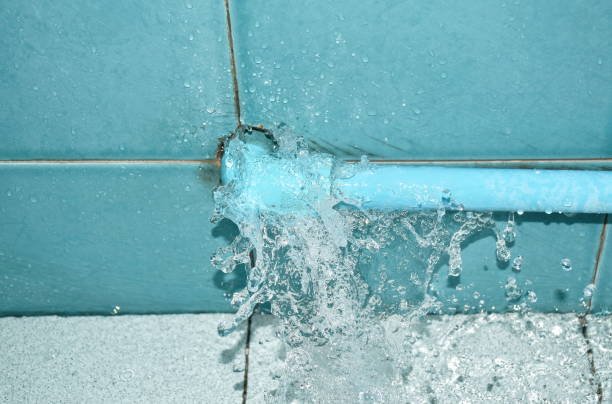
Most hidden water leaks in DeKalb do not announce themselves with a flood. They show up as a bill that jumped forty dollars for no reason, a patch of drywall that never quite dries, a furnace room that smells earthy in February, or a water heater that runs more than it used to. By the time a stain reaches the ceiling, the leak has usually been running for weeks.
Alpha Leak Fix Pros does one thing first: locates the leak. We work on homes from the century-old frame houses along College Avenue and Augusta Avenue to the 2000s subdivisions off Bethany Road and Rich Road, and the approach is the same in both — isolate, listen, confirm, then mark the spot within inches. Only then does anyone talk about cutting.
That order matters in this town. DeKalb winters put pipes under real stress; the January average low sits around 13°F and the record is 27 below. Water expands where it freezes, splits a joint, then thaws and drips quietly into a joist bay. Finding that split is a detection problem, not a demolition problem.
On this page
Signs of a hidden water leak in a DeKalb home
Your water bill climbed without a reason
The City of DeKalb Utility Division bills by usage. A jump of several thousand gallons with no houseguests, no new sprinkler system and no filled pool is the single most reliable leak signal there is.
The meter moves with everything off
Shut every fixture, then watch the small triangular or star-shaped low-flow indicator on the meter. Any movement over ten minutes means water is escaping downstream of the meter.
Warm or soft spots on a basement floor
A hot-water line running under the basement slab warms the concrete above it. Bare feet find these before instruments do.
A musty basement that never airs out
Persistent damp smell near the west or north wall, especially in a home older than 1960, often traces to a supply line seep rather than groundwater.
Running water sound with no fixture on
A faint hiss or trickle behind drywall at night, when the house is quiet, is a pressurized line losing water.
Low pressure at upstairs fixtures
Pressure that has slipped over months, not overnight, usually means water is being lost between the meter and the fixture.
Staining, blistering paint or bowed trim
Water travels along framing and shows up several feet from its source, which is exactly why guessing is expensive.
The water heater cycles more than it used to
A hot-water leak makes the heater reheat water that is disappearing into the structure. Gas and electric bills move with it.
How we find a water leak without tearing your house apart
1
We verify there is a leak, and how big
First stop is the meter at the curb or in the basement. We take a timed reading with the house isolated, then a second with the main shut at the house valve. That single test tells us whether water is being lost inside the building or out in the buried service line, and it takes about fifteen minutes.
1
We isolate the system by zone
Hot side against cold side, upstairs against downstairs, irrigation against domestic. Closing valves one at a time narrows a whole-house mystery down to one branch before we ever pick up a microphone.
1
We listen with ground and wall microphones
Pressurized water escaping a pipe makes a specific broadband hiss. Electronic amplification through a ground mic on a basement slab or a contact probe on a stud bay gives us a loudness map; the leak sits at the peak. On quiet residential streets like those in The Knolls or Heritage Ridge we can often work in the daytime, though for faint leaks we will come back after 9pm when traffic and HVAC noise drop.
1
We add tracer gas or thermal imaging when the leak is quiet
Slow seeps in plastic pipe are almost silent. We charge the isolated line with a safe hydrogen-nitrogen mix that rises through concrete and soil, then sweep with a gas-sensitive probe. Thermal imaging picks up temperature differences from hot-water leaks through tile, hardwood and drywall without touching anything.
1
We confirm the spot before anybody cuts
Two independent methods have to agree. If the acoustic peak and the thermal or gas reading land on the same square foot, we mark it, photograph it and show you the evidence on screen.
1
We open the smallest access that will work
One tile, one drywall patch, one 12-inch core through a basement slab. You see the failed pipe with your own eyes, which is the point of doing it this way.
What makes DeKalb plumbing leak in the first place
Four local conditions do most of the damage here.
Freeze-thaw on under-insulated runs
Pipes routed through rim joists, crawl spaces, unheated porch additions and garage walls sit right at the boundary between conditioned and outside air. A cold snap that drops the interior of a wall cavity below freezing splits copper on the long seam, and the split often does not leak until the thaw. That is why we take more calls in late February and early March than in January.
Old galvanized steel and early copper near the core of the city
Housing stock around the NIU campus, the Ellwood Historic District and the older blocks off Lincoln Highway includes plenty of homes originally plumbed in galvanized steel. Galvanized corrodes from the inside out, closing down the bore and eventually weeping at the threads. Copper installed in the 1950s and 60s can develop pinholes where a run was strapped too tight or where an aggressive water chemistry has thinned the wall.
Mineral content and softening
DeKalb draws its water from deep wells in the Ironton-Galesville and St. Peter sandstone plus shallow wells in the Troy Valley aquifer, and the city treats it with ion exchange softening and iron filtration before it reaches you. That treatment does a lot of the work, but private softeners, aging water heaters and long dead-leg runs still scale up and accelerate pinhole corrosion at fittings.
Heavy clay soil that moves
The glacial till under DeKalb County holds water and swells, then shrinks in a dry August. That slow seasonal movement puts shear stress on buried service lines and on the joints where a supply line passes through a foundation wall or basement floor.
Where hidden leaks turn up in DeKalb houses
- Under the basement floor slab. The copper or plastic service line often runs under the slab from the foundation penetration to the meter and water heater. A leak there surfaces as a damp ring, efflorescence, or a warm strip on the concrete.
- Inside exterior wall cavities. Common on second-floor bathrooms in older two-story homes where the supply was run up an outside wall.
- At the water heater connections. Dielectric unions and flex connectors corrode long before the tank does.
- Behind tub and shower valves. A slow drip behind a valve body soaks the subfloor and frequently shows first on the ceiling of the room below.
- Under kitchen islands. Supply lines to an island sink or a refrigerator ice maker run through or under the slab or the joist bay, with no easy visual access.
- Hose bibs and frost-free sillcocks. A sillcock that split over winter can dump water inside the rim joist every time it is used in spring, with nothing visible outdoors.
- Buried irrigation lines. Sprinkler systems tapped off the domestic supply keep leaking all season after a single winterization miss.
What happens after we find it
You get a written locate with photographs, the depth and position of the leak, what we believe failed and why, and repair options with prices. We hold an Illinois plumbing license and can carry out the repair the same visit in most cases — a section replacement, a repipe of one branch, a fitting rebuild, or a full re-route where the existing run has failed more than once.
If the right answer is that you do not need us — a toilet flapper, a softener stuck in regeneration, an irrigation zone valve you can replace yourself — we will tell you that and charge you for the diagnostic only. A locate that saves you an unnecessary excavation is worth far more to us as a referral than a job we talked you into.
Documentation for insurance claims
Sudden, accidental water damage is often covered by Illinois homeowner policies, while long-term seepage usually is not. Our reports include dated photographs, moisture readings and the mechanism of failure, which is exactly what adjusters ask for. Request the claim-ready version when you book.
Common questions
Turn off every fixture and appliance that uses water, including the ice maker and any irrigation controller. Go to your water meter and note the reading plus the position of the low-flow indicator. Wait thirty minutes without using water, then read it again. Any change means water is leaving the system. To narrow it down, close the main shutoff valve where the line enters the house and repeat: if the meter still moves, the leak is in the buried service line between the meter and the house.
Yes. That is the whole service. Acoustic listening, tracer gas, thermal imaging and pressure isolation are all non-invasive. We only open an access point once we have marked the spot with two agreeing methods, and that access is typically a single patch rather than an exploratory trench.
Most residential jobs run one to three hours. A straightforward interior supply leak in a ranch home is often located in under an hour. Buried service lines, large multi-unit buildings near campus, and very slow seeps in plastic pipe take longer because they need tracer gas and, occasionally, a second visit at night when ambient noise is low.
Regularly. Landlords and property managers around Annie Glidden Road, Hillcrest Drive and the Greek Row area are a large part of our work. We can coordinate access with tenants, report directly to the owner or management company, and schedule between leases.
We quote it on the call, before anyone is dispatched. The number depends on the size of the property, how many isolation points the system has and which instruments the job needs. Nothing is added once we arrive, and the detection fee comes off the repair when we carry it out.
It is one of the largest silent water wasters in an average home. A flapper that seals poorly can pass several hundred gallons a day, enough to add real money to a City of DeKalb bill without a single visible drop on the floor. Drop food coloring in the tank, wait twenty minutes without flushing, and check the bowl. Color in the bowl means the flapper is leaking.
Related leak services
Under-slab leaks in DeKalb are usually under a basement floor, not under a house. Same physics, same tools, an…
The line between your meter and your house is your responsibility, it is buried below the frost line, and it i…
Water is running right now. Here is exactly what to do in the next five minutes, then call us.…
Finding the leak is half the work. The other half is choosing a repair that lasts longer than the next winter.…
Think you have a leak? Call and we will find it today.
Same-day appointments across DeKalb and next-door response for active flooding. No digging or demolition until we know exactly where the leak is.
Leak line, answered 24 hours
(815) 849-0091Alpha Leak Fix Pros
1600 E Lincoln Hwy Ste D, DeKalb, IL 60115
One call does it. We work out what is likely wrong on the phone, quote before we come out, and book you in on the same call.