Water Heater Leak Detection & Repair in DeKalb, IL
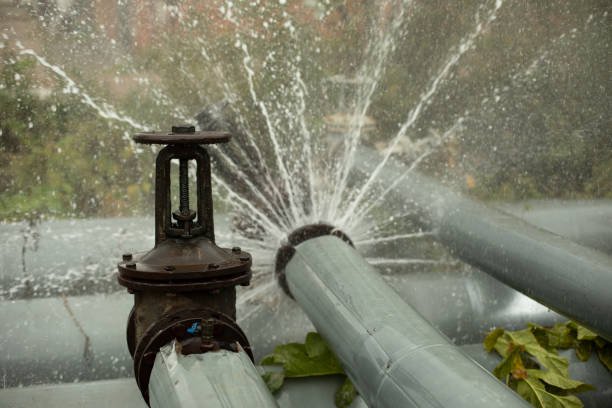
A puddle under a water heater sends most people straight to shopping for a new one. Before that, it is worth ten minutes of diagnosis, because the leak is often at a connection, a valve or a drain rather than the tank itself — and those are cheap.
Water heaters in DeKalb work harder than in warmer states. Incoming groundwater temperature from the city’s deep sandstone wells is cold year-round and colder still in winter, so the burner or element runs more, the tank cycles through more thermal expansion, and sediment and scale accumulate faster at the bottom. Twelve years is a reasonable expectation for a standard tank here, and many go sooner without maintenance.
On this page
Where the water is actually coming from
The tank itself
Water seeping from the bottom seam or the jacket with no visible source above it. Internal corrosion has perforated the tank. This one is a replacement — a leaking tank cannot be repaired.
Cold inlet or hot outlet connections
Flex connectors and dielectric unions corrode and loosen. Water runs down the outside of the tank and pools at the base, which looks exactly like a tank failure. It is not.
The temperature and pressure relief valve
A T&P valve discharging is doing its job. If it drips continuously, either the valve has failed or system pressure or temperature is too high, which is a separate and more important problem.
The drain valve at the base
Plastic drain valves in particular weep after being opened once. Cheap to replace.
Condensation
On a very cold fill in winter, a heater can sweat enough to puddle, especially early in a recovery cycle. It stops once the tank is up to temperature.
Expansion tank failure
A waterlogged thermal expansion tank leaks at its fitting and stops protecting the system from pressure spikes.
Anode rod port
A corroded or loose anode fitting on top of the tank drips down the side.
The pan drain or its absence
Where there is a pan and no drain line, water collects and overflows. Where there is no pan at all in a finished basement, that is a problem waiting to happen.
Our diagnostic sequence
1
Dry everything and watch
Sounds obvious, and it is the step people skip. With the area completely dried, the first place water reappears tells us more than any amount of speculation.
1
Test each connection under pressure
Inlet, outlet, unions, T&P discharge, drain valve, and the expansion tank fitting, each checked individually.
1
Check system pressure and temperature
High static pressure from the street with no expansion control makes a T&P valve weep and shortens tank life. If we find it, the fix is a pressure reducing valve and a properly charged expansion tank, not a new heater.
1
Inspect the tank bottom and jacket
Rust bleeding through the jacket seam, a rusted base ring, or water reappearing at the base after everything above is dry and tight means the tank is done.
1
Check the venting and combustion on gas units
While we are there. A backdrafting flue or a sooted burner is a carbon monoxide risk and belongs in the same conversation.
1
Give you both numbers
Repair cost versus replacement cost, with the age and condition of the tank in front of you, so you can make the call rather than be told.
Repair or replace: the honest math
Replace when the tank itself is leaking — there is no repair for a perforated tank. Replace when the unit is past about twelve years and needs a significant repair, because you will be spending again soon. Replace when the tank is badly scaled and recovery has fallen off, or when the unit is undersized for how the household actually uses it.
Repair when the leak is at a connection, a valve or the drain; when the tank is under eight years old and otherwise sound; or when the real problem is system pressure rather than the heater.
Sizing and type when you do replace
For a DeKalb home, incoming water is cold and recovery matters. A standard atmospheric-vent gas tank remains the value option. Power-vent units solve venting problems in tight basements. Tankless units suit households with high peak demand and give endless hot water, but they need correctly sized gas supply and venting, and in a hard-water region they need annual descaling to keep the warranty and the efficiency. Heat pump water heaters are efficient but they cool and dehumidify the space they sit in — in an unconditioned DeKalb basement, that has consequences in January worth thinking about.
Maintenance that adds years to a tank here
- Flush annually. Sediment at the bottom of the tank insulates the burner from the water, which overheats the steel and shortens tank life. In a hard water region this is the single most valuable maintenance item.
- Check the anode rod every three to four years. The anode corrodes so the tank does not. A depleted anode is a cheap part; a corroded tank is not.
- Test the T&P valve annually. Lift the lever, let it discharge briefly, let it reseat. A valve that has never been operated may not open when it needs to.
- Verify the expansion tank. Tap it — it should sound hollow at the top. Waterlogged expansion tanks are extremely common and put the whole system under stress.
- Install a pan and a drain line in any finished basement, plus a water alarm in the pan.
- Set the thermostat to 120°F. Safer, cheaper, and less scale formation than 140°F.
Common questions
Not necessarily. Only a leak from the tank itself requires replacement. Leaks at the inlet, outlet, drain valve, T&P valve or expansion tank are repairs. Dry the area completely and watch where water reappears first, or have us diagnose it, before buying a new unit.
Ten to twelve years for a standard tank with reasonable maintenance, less if it is never flushed. Cold incoming water from the deep wells means more cycling and more sediment accumulation than a milder climate would produce.
That is the temperature and pressure relief discharge. Occasional discharge during heating is normal in a system without expansion control. Continuous dripping means either a failed valve or excessive system pressure or temperature. Do not cap or plug that line under any circumstances — it is the tank's safety device.
They are excellent for high-demand households and for reclaiming basement space, and they last longer than tanks. The trade-offs in DeKalb are upfront cost, the need for adequate gas supply and new venting, and annual descaling because of mineral content. We will price both honestly and tell you which one we would put in our own house.
Usually. Standard gas and electric tank sizes are stocked locally, so a failed heater found in the morning is often replaced the same afternoon. Power-vent and tankless installations typically need scheduling.
Urgent enough to look at this week. Small drips from a tank seam rarely stay small, and a tank that fails outright can release forty to eighty gallons onto a finished floor. At minimum, put a water alarm beside it today.
Related leak services
Water is running right now. Here is exactly what to do in the next five minutes, then call us.…
Finding the leak is half the work. The other half is choosing a repair that lasts longer than the next winter.…
A water meter that keeps ticking with every tap shut off means water is going somewhere. We find exactly where…
Read this first: if you smell gas, do not investigate it. Get everyone out, then call 911 and Nicor Gas from o…
Think you have a leak? Call and we will find it today.
Same-day appointments across DeKalb and next-door response for active flooding. No digging or demolition until we know exactly where the leak is.
Leak line, answered 24 hours
(815) 849-0091Alpha Leak Fix Pros
1600 E Lincoln Hwy Ste D, DeKalb, IL 60115
One call does it. We work out what is likely wrong on the phone, quote before we come out, and book you in on the same call.