Commercial Leak Detection in DeKalb, IL
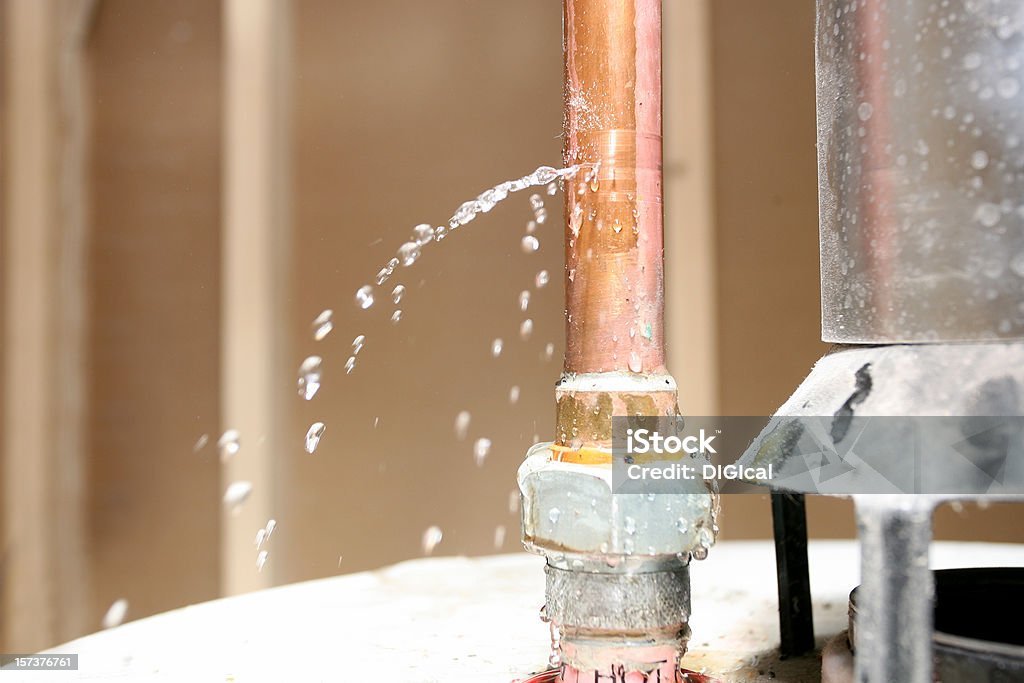
A leak in a commercial building is a different problem from a leak in a house. There are tenants who cannot lose water, a slab you cannot close the store to open, a chiller or boiler loop with no obvious access, and a landlord-tenant question about who pays. Every one of those is a reason to locate precisely instead of exploring.
We work across DeKalb’s commercial stock: the retail and restaurant strip along East Lincoln Highway and Sycamore Road, multi-unit residential and student housing near the NIU campus, offices and medical buildings, warehouses and light industrial off Peace Road and the Route 23 corridor, churches, schools and municipal buildings.
On this page
Commercial leak indicators worth acting on
Water usage that no longer matches occupancy
Track gallons per occupied unit or per covered month. A drift upward without an operational reason is the earliest and cheapest leak signal a facility manager has.
Make-up water on a boiler or chilled water loop
A closed loop should not consume water. Regular make-up means a leak in the loop, and one that is doing corrosion damage while it runs.
Ceiling tile staining on a lower floor
In multi-story buildings, water travels along conduit, joists and deck flutes. The stain is rarely below the leak.
A tenant complaint about pressure or temperature
Often the first human-reported symptom of a leak upstream in a riser or a branch.
Efflorescence or rust on structural steel
A slow leak onto structure is a maintenance liability that compounds quietly.
Slab moisture under flooring in a retail space
Curling vinyl tile, adhesive failure and moisture readings that exceed flooring spec usually mean water under the slab.
Elevated humidity or condensation in a conditioned space
Frequently traced to a hidden supply leak or a failed roof drain rather than the HVAC system that gets blamed.
A sewer odor complaint that never resolves
Cracked under-slab drainage or a failed vent, both of which a camera and smoke test find quickly.
How a commercial locate is run
1
Scope the building with you first
Drawings if they exist, riser diagrams, zone valves, meter locations, submeters, and a list of what cannot be shut down and when. Fifteen minutes of planning removes most of the disruption.
2
Submeter and zone isolation
Large buildings are divided and tested section by section — floor by floor, riser by riser, tenant by tenant. This localizes the loss before any instrument comes out of the case and, in multi-tenant buildings, often answers the billing question at the same time.
3
After-hours acoustic work
Commercial buildings are noisy. We schedule listening surveys for nights and weekends when HVAC, refrigeration and occupancy noise is down, which is usually when you want us there anyway.
4
Tracer gas for slabs, loops and buried lines
The method of choice for long horizontal runs under warehouse slabs, in hydronic loops, and for buried site piping across a parking lot.
5
Thermal and moisture survey
Infrared across ceilings, walls and floors maps where water actually is, which supports both the repair scope and the insurance conversation.
6
Report your stakeholders can use
A written locate with imagery, methods, findings and recommended repair scope — formatted for a property manager, an owner, an adjuster or a board, not just for a plumber.
Facilities we work with in DeKalb
Apartment buildings and student housing
Near-campus properties around Annie Glidden Road, Hillcrest Drive, Blackhawk Road and Greek Row share a set of problems: aging risers, high fixture use, tenant turnover, and vacancy over winter break when a single unheated unit can freeze a line and flood three floors. We work with owners and management companies on both emergency response and scheduled pre-winter inspections.
Restaurants and retail
Grease-laden drain lines, high-use fixtures, ice machines and dish machines with constant supply demand, and floors that cannot be opened during service hours. We schedule around your trading day and locate precisely so any concrete work is a single cut.
Offices, clinics and schools
Where occupancy and infection control matter, non-invasive locating is not just cheaper but necessary. We work around class schedules and clinical hours.
Warehouse and light industrial
Large slabs, long buried site utility runs, fire suppression piping and process water lines. Tracer gas and correlation are the workhorses here, and a locate that saves cutting a hundred feet of warehouse slab pays for itself many times over.
Property managers and multi-site owners
We can set up scheduled water audits across a portfolio, benchmark usage per building, and catch leaks from the utility data before they produce damage. If you manage several DeKalb County properties, that is usually the most cost-effective arrangement.
The landlord, tenant and insurance question
In multi-tenant buildings, who pays is often disputed and usually resolved by evidence rather than argument. Our reports state where the leak was, which portion of the system it sits on, what the likely cause was, and how long the conditions suggest it had been running. That documentation supports a lease-based allocation and an insurance claim far better than a verbal account.
We also handle the practical side: coordinating access with tenants, providing certificates of insurance, following site safety requirements, and working within building hours. On occupied properties we treat disruption as part of the cost of the job, because for you it is.
Common questions
In nearly all cases. Zone isolation is done in short intervals, and acoustic surveys are scheduled after hours. The purpose of precise locating is specifically to avoid the long shutdown that exploratory demolition requires.
Yes, extensively, across single buildings and portfolios. We can invoice to management, report to owners, coordinate tenant access, and set up recurring inspections ahead of winter and after the spring thaw.
Yes. Large slabs are where tracer gas earns its keep, together with line tracing and correlation on long runs. We have found leaks under slabs where the only visible symptom was a slightly elevated water bill.
Yes. We carry general liability and workers' compensation coverage and can provide a certificate of insurance naming your entity before work begins. Tell us the requirements when you book.
We locate leaks on those systems and coordinate with your sprinkler contractor or process engineer for repairs that fall under their scope. We do not perform fire suppression system alterations, and we will say so rather than take work outside our lane.
Same as residential — the line is answered 24 hours. For managed properties we can hold building access details and contact trees on file so response does not wait on somebody finding a key.
Related leak services
A sewer line does not leak out under pressure — it leaks out slowly and lets groundwater and roots in. The cam…
Water is running right now. Here is exactly what to do in the next five minutes, then call us.…
Read this first: if you smell gas, do not investigate it. Get everyone out, then call 911 and Nicor Gas from o…
A water meter that keeps ticking with every tap shut off means water is going somewhere. We find exactly where…
Think you have a leak? Call and we will find it today.
Same-day appointments across DeKalb and next-door response for active flooding. No digging or demolition until we know exactly where the leak is.
Leak line, answered 24 hours
(815) 849-0091Alpha Leak Fix Pros
1600 E Lincoln Hwy Ste D, DeKalb, IL 60115
One call does it. We work out what is likely wrong on the phone, quote before we come out, and book you in on the same call.