Sewer Line Leak Detection & Camera Inspection in DeKalb, IL
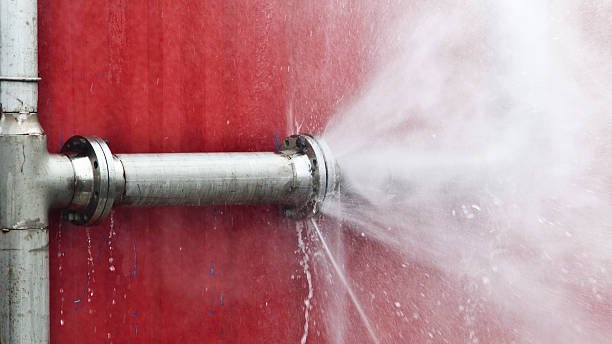
Sanitary sewer laterals fail differently from supply lines. There is no pressure behind the water, so the symptom is rarely a spray or a spurt. Instead you get a joint that has offset a half inch, a crack that roots have found, a belly where the line has settled and solids now collect, or a clay pipe section that has finally collapsed after eighty years underground.
In older parts of DeKalb, laterals of vitrified clay tile with mortared bell-and-spigot joints are still in service, and mature silver maples and elms along the older streets are extremely good at finding those joints. Newer subdivisions have PVC, which does not crack from root pressure but will settle, separate at a poorly bedded joint, or get crushed by a later excavation.
On this page
Signs your sewer lateral is leaking or failing
1
Repeat backups in the same fixture
A drain that clears then blocks again on a predictable cycle is not a clog problem, it is a pipe condition problem. Roots regrow; a belly refills.
1
Gurgling from floor drains or toilets
Air being displaced through the trap seal means flow in the lateral is restricted downstream.
1
Sewer odor in the basement or yard
Sewer gas escaping a cracked lateral or a failed joint is both a nuisance and a warning sign worth taking seriously.
1
A patch of lawn that is greener and softer
Effluent is fertilizer. An unusually vigorous strip of grass over the sewer run is a classic exfiltration signature.
1
Sinkholes or depressions in the yard
When a lateral loses its integrity, soil migrates into the pipe and the surface settles above it.
1
Sump pump running after every big rain
A cracked lateral lets groundwater infiltrate. In heavy DeKalb County rain events, infiltration can overwhelm a system that is otherwise fine.
1
Slow drains throughout the house at once
One slow sink is a fixture issue. Every drain in the house slowing together points at the main lateral.
1
Rodent or insect activity indoors
A broken lateral is an access route. Unexplained pest activity around a basement floor drain deserves a camera inspection.
How a sewer inspection actually works
Locate and open a cleanout
We work from an existing cleanout where one exists, or pull a toilet or access the stack where it does not. Finding the cleanout is half the job on older DeKalb homes where it may be buried in a flower bed or paved over.
Run a self-leveling push camera through the lateral
A high-resolution camera head goes down the line to the city main, recording the whole run. You watch the screen with us. Nothing about this should be a story we tell you afterward.
Identify and classify what we find
Roots, offset joints, longitudinal cracks, bellies holding standing water, scale build-up, foreign objects, previous repairs, and the transition to the city main. We describe severity in plain terms rather than jargon.
Mark the defect location above ground
The camera head carries a sonde. We track it from the surface with a receiver and paint the exact spot and depth of the defect on your lawn or driveway. That number is what makes a targeted repair possible.
Smoke or dye test where infiltration is the question
When the issue is groundwater getting in or a suspected cross-connection between storm and sanitary, smoke testing shows every opening in the system quickly and harmlessly.
Deliver video and a written report
You keep the footage. It matters for insurance, for a home sale, for a municipal dispute, and for deciding between a spot repair and a full replacement.
Repair options for a failed lateral
Hydro jetting and root cutting
Mechanical root cutting followed by high-pressure jetting restores a line’s full diameter and buys time. It does not fix a structural defect, and we will say so; if the camera shows the roots entering at an offset joint, they will come back. Jetting is the right first move when the pipe is sound and the problem is accumulation.
Spot excavation and section replacement
One bad joint, one crushed section, one collapsed length near a tree — a located defect can be dug and replaced in a single pit. This is the most common repair on suburban DeKalb lots where the lateral is accessible.
Trenchless lining and pipe bursting
Cured-in-place lining pulls a resin-saturated liner through the existing pipe and cures it into a new jointless pipe inside the old one, sealing every root entry point along the way. Pipe bursting fractures the old pipe outward while pulling new HDPE through. Both avoid trenching under driveways, mature trees, sidewalks and finished landscaping, which on tight city lots is often the deciding factor.
Full lateral replacement
When clay tile has failed in several places or the line has a significant belly along most of its run, replacing it is the only repair that ends the problem. Modern PVC properly bedded and sloped is good for the life of the house.
Sewer inspections before you buy a DeKalb house
A standard home inspection does not include the sewer lateral. On any home built before about 1975 — that covers most of the near-campus neighborhoods, the Ellwood area, and the older streets off Lincoln Highway and Fourth Street — a pre-purchase camera inspection is inexpensive insurance against a five-figure surprise.
What we look for on a buyer’s inspection: pipe material and its age, root intrusion and where it is entering, any belly and how much water it holds, offsets, prior repairs and whether they were done properly, and the condition of the connection at the city main. You get the video and a report you can hand to your agent or use in negotiation.
Backwater valves and basement flooding
If your basement has flooded from a sewer surcharge during a heavy DeKalb County storm, ask us about a backwater valve while we are there. It is a far smaller job to install one as part of a lateral repair than as a separate excavation later.
Common questions
We give you the price on the phone. A straightforward inspection with a surface locate and recorded video is at the lower end of what we do, and it is often credited when it is carried out as part of a drain cleaning or repair. It costs more where there is no accessible cleanout and we have to create access.
Roots do not usually break sound pipe. They find an existing opening — a slightly offset clay joint, a hairline crack, a failed mortar seal — because moisture and nutrients leak out and roots grow toward them. Once inside, the root mass expands and widens the opening. That is why root problems recur until the entry point itself is sealed or replaced.
The public sanitary main is maintained publicly; the lateral from the building to the main is generally the property owner's responsibility. If our camera shows the defect is at or beyond the connection to the main, we document it with video and the surface locate so you can take it up with the appropriate authority rather than pay for work that is not yours.
Not always. A shallow belly that holds a little water may run for decades with routine maintenance. A deep belly that holds standing water across several feet will collect solids, cause recurring backups and eventually need correction. The camera footage plus the depth of standing water tells us which one you have.
We push a non-toxic, odorless smoke through the drain and vent system at low pressure and watch where it escapes. It shows cracked pipe, failed joints, dry traps, unsealed cleanouts and improper connections in minutes. The smoke is harmless, leaves no residue and dissipates quickly. It is standard practice in municipal sewer work.
If you have mature trees over the run or clay tile pipe, every two to three years is reasonable, and after any backup. For PVC laterals in newer subdivisions with no history of problems, inspect at purchase and then only if symptoms appear.
Related leak services
A wet basement floor has four possible causes and four completely different fixes. Paying for the wrong one is…
A water meter that keeps ticking with every tap shut off means water is going somewhere. We find exactly where…
Water is running right now. Here is exactly what to do in the next five minutes, then call us.…
Commercial leaks cost twice: the water and the downtime. Our job is to keep the second number near zero.…
Think you have a leak? Call and we will find it today.
Same-day appointments across DeKalb and next-door response for active flooding. No digging or demolition until we know exactly where the leak is.
Leak line, answered 24 hours
(815) 849-0091Alpha Leak Fix Pros
1600 E Lincoln Hwy Ste D, DeKalb, IL 60115
One call does it. We work out what is likely wrong on the phone, quote before we come out, and book you in on the same call.